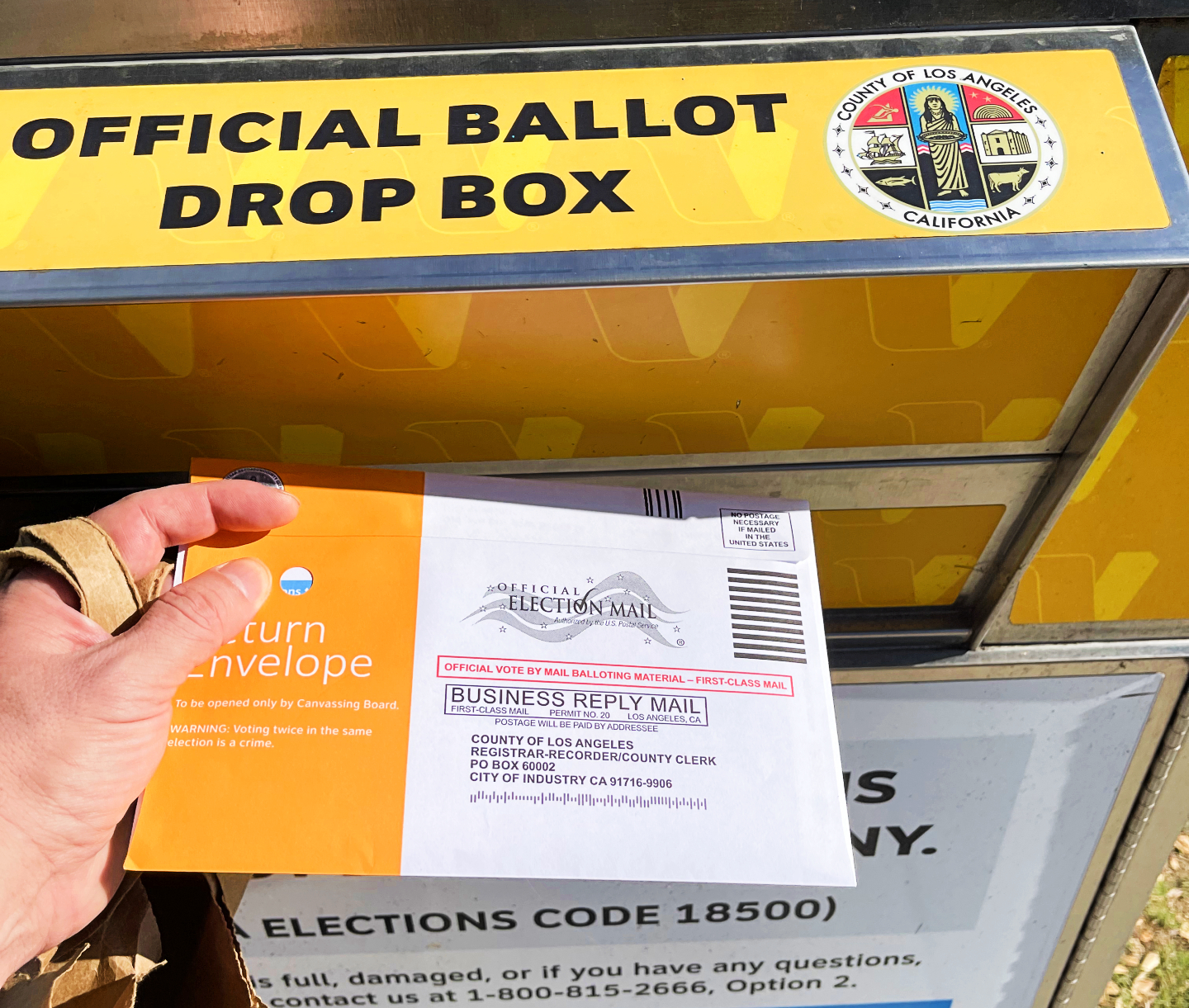
Last updated October 29, 2026. Frequent news media consumers will likely have concerns as Election 2026 unfolds in the US. The good news is that you don’t need special expertise or a ton of time to stay on top of the election news to get through this election while protecting your peace of mind. This election guide provides information, resources, and links.
Below is a general election guide that anticipates what is likely to happen. The election guide also offers examples of relevant guardrails and a few ideas for keeping your own mind steady throughout election season.
This isn’t a voter guide or endorsement list. CivicHaven isn’t advocating how to vote. Instead, we’re offering in the election guide here background on how the process works, what’s contested, and how to stay informed without being overwhelmed. Several legal cases remain ongoing. The footnotes link to the Sources list with later citations in brackets.
Basic Election Rundown
- Election Day is Tuesday, November 3, 2026. All 435 House seats and 35 Senate seats are up for election. Various governors’ races, many state and local contests, and propositions are on ballots as well.1 2
- Election night results are unofficial. Counting, certification, and any recounts take days to weeks. That’s the system doing its job, not breaking.3 4
- Expect noise. Lawsuits, fraud claims, and recount talk are likely in at least some races. A claim is not a finding, and a lawsuit is not a ruling.
- There are real guardrails. In 2026, courts blocked or narrowed several major federal efforts to change voting rules. Groups like the ACLU were involved in many of those fights.
- Your best tools are boring ones: a plan to vote, a few trusted sources, and permission to log off.
🚨 Updates
Alaska, October 29: Republican Alaska Gov. Mike Dunleavy has ordered an investigation into the Democratic U.S. Senate candidate Mary Peltola following allegations in The New York Times that her campaign was involved in recruiting another candidate with the same name as her opponent, Republican incumbent Dan Sullivan. The White has has called for criminal prosecution of Peltola and her campaign.
Alaska ballots will identify “Dan S. Sullivan” as a “registered Republican” and “incumbent,” while “Daniel J. Sullivan Jr.” will not have a party affiliation. The Alaska Supreme Court previously ruled the latter is qualified to run.
California, October 29: Cal Matters reports, “A federal judge refused to order California to set aside 20,000 ballots, citing a ‘pattern of attempted election interference’ by the Trump administration.” The Justice Department has filed an urgent appeal with the 9th Circuit Court of Appeals.
The Current Mood
Early voting has been underway for weeks and over 100 million people could cast ballots if turnout is like 2022. Political ad spending has already reached a record of $3.8 billion as of October 12 [1]. The party in power in the White House typically suffers from midterm losses, which is partially why the stakes feel so high. Power could change hands in important offices.
Additionally, there are questions about whether the president will attempt to interfere with state-run elections, after years of insisting that widespread cheating occurs. Reporters note this lacks evidence. The administration asserts a different position. Its stated position is that its orders lawfully protect elections.5 The election guide will look at both perspectives below.
Why “we don’t know yet” is normal
Perhaps the most calming fact in this guide: what you see on election night is not the final result. Counting routinely runs past Election Day, and practices vary by state. Some states can process mail ballots before Election Day, so they report sooner; others can’t, so they take longer.
Mail ballots add another factor. In June, the Supreme Court ruled 5–4 in Watson v. Republican National Committee that federal Election Day statutes do not stop states from counting mail ballots that were postmarked by Election Day but arrive afterward.6 7 So in states with those grace periods, some ballots will still be trickling in after the polls close, which is legal and expected. Close races take longest of all, and recount rules vary widely from state to state.8
After counting comes canvassing and certification, the official sign-off. The calendars differ, so here are a few examples:
- Michigan: county boards of canvassers should certify within 14 days (by November 17), and the state board by November 23.9
- Colorado: the secretary of state certifies after any mandatory recounts, which must be finished by December 4. Requested recounts must finish by December 8.10
- Florida: disputes after certification go through court election contests, and complaints for the general election must be filed by November 26.11
- Wisconsin: recounts happen before final certification.12
The takeaway: Some places will wrap up within a week or two, and others will still be working into early December. A long timeline isn’t a red flag by itself. It’s just a calendar. Look up your own state’s dates on your Secretary of State’s website.
Possible Headlines and What’s Probably Happening
Recounts
A recount is a re-check of submitted ballots, not a redo of the election. Some states trigger them automatically when a margin is razor-thin, and others allow a candidate or voter to request one. Often a recount means the process is working as designed.
Ballot challenges and lawsuits
Expect disputes over things like signature matching, provisional ballots, and deadlines. Candidates and parties use lawsuits as a legal tool. What matters is what a judge decides. Courts don’t always side with challengers.
In an early dispute involving the March 2026 election order, a federal judge in Washington declined to block it, finding the challenge premature.13 Other courts have acted, as in Boston. Either way, disputes are handled by judges, which is how the system is designed.
Certification fights
Certification is supposed to be a routine, mandatory duty. Election-law researchers at the Brennan Center have documented dozens of cases of local officials across the country who have refused or threatened to refuse to certify results in recent cycles. These threats are based primarily on election-denial claims.
Such efforts generally failed because state courts and state officials stepped in [9]. The Brennan Center and its partners warn that the threat hasn’t disappeared, and they’ve published state-by-state guides to the legal tools for responding, including court orders that compel certification [9] [10] [11].
Fraud claims
Let’s separate what’s known from what’s alleged.
- A Brennan Center analysis of 23.5 million votes in 42 jurisdictions in 2016 found 30 suspected cases of noncitizen voting referred for investigation, about 0.0001% of votes.14
- The Heritage Foundation maintains a database of 1,546 proven fraud cases collected across many years.
- Rare isn’t the same as zero. Individual cases do happen and do get prosecuted, which shows the safeguards catching them. The Justice Department’s position is that accurate, well-maintained voter rolls are essential to election integrity. States resisting its data requests should show their work.15 Reasonable people can weigh that argument against the evidence. The best rule of thumb: When you see a big fraud claim, ask how many ballots, in which county, and confirmed by whom.
Tampering and hacking claims
The federal election-security agency, CISA, has said the systems used to tabulate and certify results are protected by multiple steps, including audits that check the reported results against paper records.16 This means that allegations of votes being flipped by digital interference are testable. If votes have been altered, the paper trail will show it.
Federal agents and the polls
This is an issue many people ask about, so here’s the grounded version. Election officials around the country are rehearsing responses to a range of scenarios, including federal agents appearing at polling places.17
The Department of Homeland Security has said ICE doesn’t plan to patrol polling places, leaving open the possibility that agents could respond to a threat or serve a warrant nearby. Federal law sharply restricts armed federal agents at polling places, and officials have tools to respond if that line is crossed.18 19 20
Legal analysts at the nonpartisan-leaning group Protect Democracy say no emergency power exists that would let a president lawfully postpone or cancel elections.21 If you see something that looks improper, tell your local election officials. To avoid the question entirely, consider voting by mail, at a drop box, or early where these options are available.
Who’s pushing back: courts, states, and groups like the ACLU
The March 2026 Executive Order 14399 directs the Department of Homeland Security to compile state “citizenship lists” and instructs the U.S. Postal Service to propose rules to deliver mail ballots only to voters on state lists.22 23 Twenty-three states sued [5]. The story since has had many twists:
- On June 25, a federal judge in Boston blocked the administration from implementing key parts of the order for November in the states that sued [5].
- On August 24, the Supreme Court voted 6–3 to lift one block on narrow procedural grounds, since the Postal Service hadn’t yet finalized its rule.24
- After the Postal Service issued its final rule, a new injunction followed. On September 14, the Supreme Court declined to lift it, meaning the rule can’t be used in the November elections.25 26
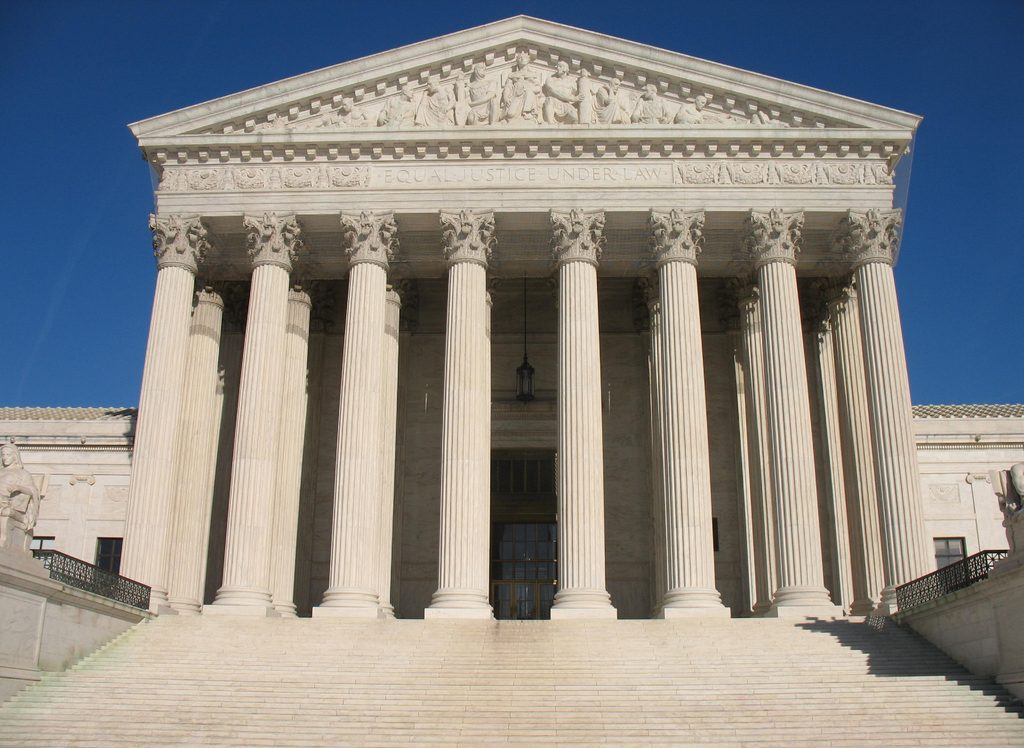
The ruling wasn’t unanimous or simple. Justices Alito and Thomas dissented. Justice Kavanaugh wrote that there’s “a fair prospect” the rule falls within the Postal Service’s authority, but that using it now would be arbitrary and capricious because officials lack time to implement it. The ruling could leave the door open for future elections [26]. The administration’s lawyers called the rule a set of modest envelope-design and information requirements, and the White House says it’s confident it will ultimately prevail [5].
The ACLU’s election activities
The ACLU and its affiliates are among the groups acting on several fronts:
• The ACLU and co-counsel sued over the March 2025 executive order, on behalf of voter-registration and advocacy organizations, arguing the president lacks power to impose proof-of-citizenship requirements.27 Federal judges in Washington and Boston have since permanently blocked key provisions of that earlier order [5].
• The ACLU is part of the coalition of voting-rights groups that challenged the Postal Service rule and welcomed the Supreme Court’s September decision.28
• They’re challenging New Hampshire’s new documentary-proof-of-citizenship law for voter registration.
• Since October 2025, the ACLU moved to intervene or filed friend-of-the-court briefs in more than two dozen cases where the Justice Department demanded full, unredacted state voter rolls.29
The DOJ has sued 29 states and D.C. over this data.30 According to the ACLU and Common Cause, judges in 26 states and the Sixth Circuit have dismissed the demands, and one federal court ruled the effort violates voter privacy [22]. The same groups note that at least a dozen states have handed over their data voluntarily.31
To make a fair caveat: the ACLU and its allies are advocates, and these characterizations come from their own announcements. The administration disagrees on the merits and keeps pursuing these cases. But the broader point is that courts, state officials, and civil-society groups are all active, and that kind of engagement is a sign, though not a guarantee, of a healthy, functional system.
Feeling stressed is understandable
If the headlines are getting to you, you’re not alone. In the American Psychological Association’s 2016 survey, 52% of adults called the election a significant source of stress, including 55% of Democrats and 59% of Republicans. People who use social media reported even more stress.32 In 2020, nearly 70% of respondents said so, again across party lines. Stress about elections is a bipartisan phenomenon.
Uncertainty itself is a stressor, and having a plan, even a small one, restores a sense of control.
Eight mentally healthy ways to follow news after the election
| 1. Sort every headline into one of three categories: claim, filing, or ruling. A claim is simply someone saying something. A filing is someone asking a court to act. A ruling is a judge deciding. Most scary headlines live in the first two bins, and many of those never become the third. | 2. Learn the steps in the process: unofficial results, then canvass, then certification, then potential recounts or court contests. If a story skips a rung, ask why. |
| 3. Ask four quick questions. Who is the source? What’s the evidence, and can I see it? Can my local election office confirm or deny it? And what does the process say happens next? | 4. Limit your news to a schedule. The APA’s advice for election stress is to limit media consumption and take digital breaks, reading just enough to stay informed. Try two check-ins a day, from media with transparent sourcing, and keep your phone out of the bedroom. |
| 5. Pause before sharing. Rumors move faster than corrections, and election night is rumor season. If a claim is startling, wait for additional, independent confirmation before you pass it along. | 6. Focus on people and purpose. Concerned citizens have many constructive outlets: volunteering, serving as a poll worker in a future election, helping neighbors check their registration, or simply being friendly to your local election staff. The APA also suggests staying focused on the present and giving yourself permission to end conversations that veer toward conflict. |
| 7. Mind your needs, and ask for help when you need it. Sleep, movement, real food, and time with people you like are important. Avoid numbing the stress with alcohol or drugs. If worry is interfering with your sleep, work, or relationships, talk to a mental health professional or your doctor. If you’re ever in crisis, you can call or text 988 any time in the U.S. | 8. Remember: Vigilance and calm aren’t opposites. You can take threats to fair elections seriously while trusting that many people are doing careful, unglamorous work to protect the process. Both are true at the same time. |
A plan for Election Day and after
- Vote early or on November 3. Confirm your registration and polling place through your state or county election office or vote.gov. In most places, if you’re in line when polls close, you can still vote.
- If something goes wrong, request a provisional ballot and contact your local election office. The nonpartisan Election Protection hotline, 866-OUR-VOTE, also helps voters with problems.
- If you see possible federal interference at a polling place, tell local election officials.
- On election night, expect “not yet” instead of “never.” Mark your state’s certification date in your calendar and check back then.
- Be considerate to election workers. They’ve likely faced years of harassment, and they’re doing this for a modest paycheck.
Election Administration & Certification Resources
- State and Regional Procedures: For specific rules on canvassing, recounts, ballot challenges, and vote certification, consult the USAGov State and Local Election Offices directory to find your designated local election board or state election division. Specific regulations, canvass timelines, and recount requirements are maintained by individual jurisdictions.
- Election Audits and Security: For information on federal voting system standards, equipment testing, and post-election audit frameworks, see the U.S. Election Assistance Commission.
- Voting Rights and Legal Updates: For information regarding legal challenges to voting policies and proactive court actions around ballot access, monitor updates from civil liberties organizations such as the American Civil Liberties Union as well as reputable news outlets.
What we don’t know yet
Quite a bit, honestly. The Postal Service rule is blocked for this election, but the Supreme Court’s order doesn’t settle whether it could be used in later ones. Other lawsuits regarding the executive orders and voter-data demands are still moving. And no one can say how many races will end up close enough to trigger recounts or court fights.
But we already know that elections in the U.S. are run by thousands of local jurisdictions, each with its own checks, paper trails, deadlines, and courts to enforce them. While that decentralization can make results slower, it also makes the system hard to hijack. Take a breath, make your plan, vote, and give the process time to do its work. 🟩
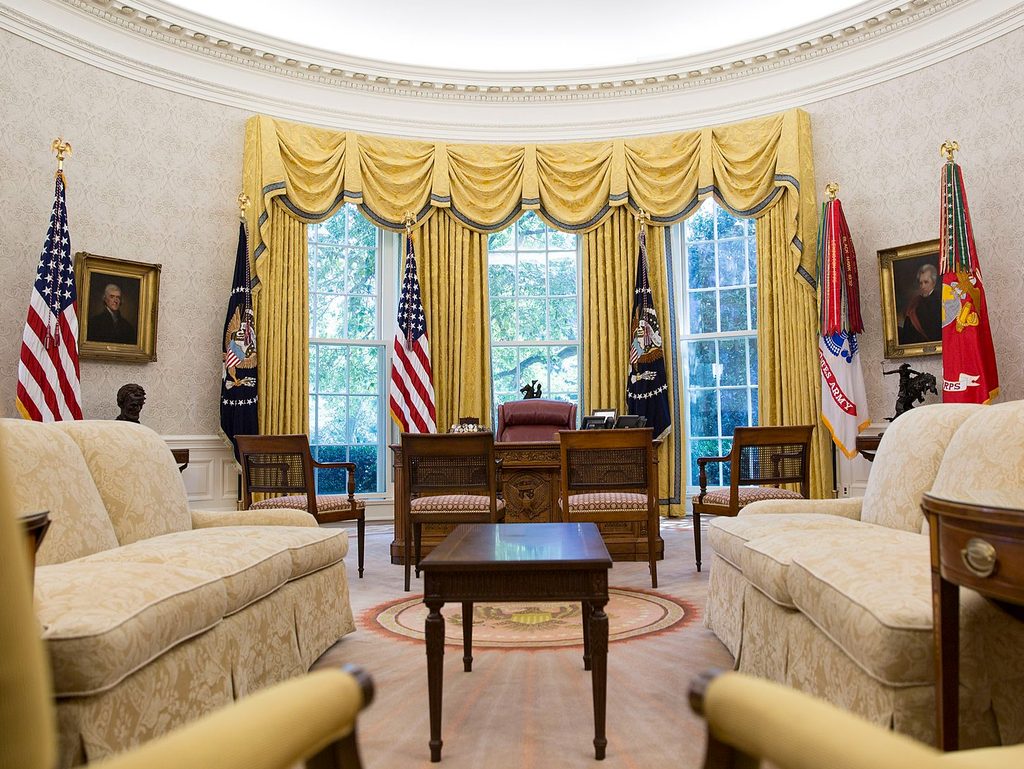
“I voted” Images: Louis Caravella. Oval Office Image: Public Domain. Supreme Court Image: Kjetil Ree. Research: Claude- and Gemini-assisted x CivicHaven.
Sign up to access early models of the CivicHaven chat assistant.
Sources
Note: Several sources are advocacy organizations or opinion columns, flagged below. Where a claim rests on one, the text says so.
- Khaleej Times (wire explainer), “US midterm elections 2026: All you need to know ahead of November 3,” Oct. 19, 2026. https://www.khaleejtimes.com/world/americas/us-midterm-elections-2026-voting-explainer ↩︎
- TNND Fact Check Team (via WLOS), “435 House seats and 35 Senate races hit the ballot in November.” https://wlos.com/news/nation-world/fact-check-team-435-house-seats-and-35-senate-races-hit-the-ballot-in-november-election-day-congress-candidates-voters ↩︎
- ACLU of Maine, “Why Counting the Vote Can, and Should, Take Time” (written for the 2024 cycle; the counting principles still apply). https://www.aclumaine.org/?p=7368 ↩︎
- Political.org, “Why Some Midterm Races May Take Days to Call,” Oct. 19, 2026. https://political.org/2026/10/19/why-some-midterm-races-may-take-days-to-call-close-margins-slow-counts-and-mail-ballot-rules/ ↩︎
- Ballotpedia News, coverage of federal rulings on the March 2025 and March 2026 election executive orders, including the White House statement. https://news.ballotpedia.org/?p=49122 ↩︎
- Ohio State University Election Law, summary of Watson v. Republican National Committee, June 29, 2026. https://electioncases.osu.edu/2026/06/ ↩︎
- Alaska Division of Elections, notice on Watson v. RNC, June 29, 2026. https://www.elections.alaska.gov/?p=19511 ↩︎
- Political.org, “Why Some Midterm Races May Take Days to Call,” Oct. 19, 2026. https://political.org/2026/10/19/why-some-midterm-races-may-take-days-to-call-close-margins-slow-counts-and-mail-ballot-rules/ ↩︎
- Brennan Center for Justice, “Michigan Election Certification Processes and Guardrails,” Aug. 3, 2026. https://www.brennancenter.org/our-work/research-reports/michigan-election-certification-processes-and-guardrails-0 ↩︎
- Brennan Center for Justice, “Colorado Election Certification Processes and Guardrails,” Oct. 9, 2026. https://www.brennancenter.org/es/node/12530 ↩︎
- Brennan Center for Justice, “Florida Election Certification Processes and Guardrails,” Oct. 9, 2026. https://www.brennancenter.org/es/node/12531 ↩︎
- Campaign Legal Center, “Wisconsin Election Certification Processes and Guardrails,” 2026. https://campaignlegal.org/sites/default/files/2026-08/2026%20Wisconsin%20Certification%20Guide_Final.pdf ↩︎
- Courthouse News Service, “Judge swats Democrats’ shot at stopping Trump’s election overhaul.” https://courthousenews.com/judge-swats-democrats-shot-at-stopping-trumps-election-overhaul/ ↩︎
- ABC30 / Brennan Center, “2024 election fact check: Noncitizens can’t vote, and instances are ‘vanishingly rare.’” https://abc30.com/15479942 ↩︎
- NBC News (via NBC San Diego), “Justice Department sues 5 additional states for voter roll data.” https://www.nbcsandiego.com/news/politics/president-trump/justice-department-sues-5-additional-states-voter-roll-data/3987216/ ↩︎
- Factchequeado, “How do we know elections are safe?” (quoting CISA statements). https://factchequeado.com/teexplicamos/20240604/how-do-we-know-elections-are-safe-why-do-people-say-is-it-rumored-that-the-2020-elections-were-not/ ↩︎
- Votebeat, “Arizona election officials prepare for possibility of ICE at the polls in 2026,” Oct. 20, 2026. https://www.votebeat.org/arizona/2026/10/20/ice-polls-federal-interference-midterms-2026-pinal-pima-lucha-aclu/ ↩︎
- Votebeat, “What to expect at the polling place amid uncertainty over federal agents,” Oct. 7, 2026. https://www.votebeat.org/wisconsin/2026/10/07/should-you-expect-ice-at-the-polls-november-midterm-election/ ↩︎
- Al Jazeera, “Will ICE agents play a role in the 2026 US midterm elections?” Oct. 23, 2026. https://aljazeera.com/news/2026/10/23/will-ice-agents-play-a-role-in-the-2026-us-midterm-elections ↩︎
- ACLU/Common Cause press release (advocacy source), “Federal Court Sides With Voters, Ruling DOJ Data Demands Violate Voter Privacy.” https://aclu.org/press-releases/federal-court-sides-voters-ruling-doj-data-demands-violate-voter-privacy-states-election-authority ↩︎
- Protect Democracy (advocacy source), “Frequently Asked Questions About the 2026 Midterm Elections.” https://protectdemocracy.org/work/frequently-asked-questions-about-the-2026-midterm-elections/ ↩︎
- Federal Register, Executive Order “Ensuring Citizenship Verification and Integrity in Federal Elections” (doc. 2026-06601). https://public-inspection.federalregister.gov/2026-06601.pdf ↩︎
- SCOTUSblog, “Trump administration asks Supreme Court to clear the way for new mail-in voting restrictions,” July 2026. https://www.scotusblog.com/2026/07/trump-administration-asks-supreme-court-to-clear-the-way-for-new-mail-in-voting-restrictions/ ↩︎
- National Association of Counties, “Supreme Court declines emergency review of USPS mail-in ballot rule, leaving nationwide block in place.” https://www.naco.org/news/supreme-court-declines-emergency-review-usps-mail-ballot-rule-leaving-nationwide-block-place ↩︎
- CNBC, “Supreme Court rejects Trump bid to lift block on U.S. Postal Service mail-in ballots rule,” Sept. 14, 2026. https://www.cnbc.com/2026/09/14/supreme-court-trump-mail-ballots-midterms.html ↩︎
- SCOTUSblog, “Supreme Court denies Trump administration’s request to implement parts of USPS rule on mail-in voting,” Sept. 2026. https://www.scotusblog.com/2026/09/supreme-court-denies-trump-administrations-request-to-implement-parts-of-usps-rule-on-mail-in-vo/ ↩︎
- ACLU court case listings on voting rights, including the March 2025 order and New Hampshire HB 1569 (advocacy source). https://www.aclu.org/court-cases/page/12 ↩︎
- ACLU press release (advocacy source), “U.S. Supreme Court Blocks Postal Service From Restricting Mail Ballots,” Sept. 14, 2026. https://www.aclu.org/press-releases/u-s-supreme-court-blocks-postal-service-from-restricting-mail-ballots ↩︎
- ACLU, “ACLU Fights DOJ Overreach to Protect Voter Privacy and Sensitive Data” (advocacy source). https://www.aclu.org/aclu-fights-doj-overreach-to-protect-voter-privacy-and-sensitive-data ↩︎
- NBC News (via NBC San Diego), “Justice Department sues 5 additional states for voter roll data.” https://www.nbcsandiego.com/news/politics/president-trump/justice-department-sues-5-additional-states-voter-roll-data/3987216/ ↩︎
- ACLU/Common Cause press release (advocacy source), “Voting Rights Groups Sue DOJ to Block National Voter Surveil-and-Purge Database.” https://aclu.org/press-releases/voting-rights-groups-sue-doj-to-block-national-voter-surveil-and-purge-database ↩︎
- AHC Media, “How the election is affecting America’s psyche” (APA Stress in America survey, 2016 cycle). https://ahchealthenews.com/?p=55662 ↩︎
Leave a Reply